
Microperforated films
BOPP film PPVH for optimal product freshness.

Micro-perforated films hot-needle perforation –films optimal product freshness
BF-PPVH / BF-PPVM – Available in 15, 17, 18, 20, 25, 30, 35, 40, 48, and 50 µm
Fresh foods place the highest demands on their packaging: bread needs to stay crisp, fruits and vegetables require breathability, and sausage and cheese products demand a controlled packaging environment. This is exactly wherefilms microperforated films heat-sealedfilms come into play.
Targeted perforation—whether in the form of fine microperforations or hot-needle perforations—creates packaging that precisely controls gas exchange and moisture regulation. The result: a longer shelf life, less food waste, and a striking, sales-promoting appearance that showcases your products perfectly at the point of sale.
Free consultation
What is hot-needle perforation? Process, function, and differences from microperforation
In hot-needle perforation (also known as hot-needle perforation or hot-needle perforation), heated needles are passed through the BOPP film. The heat creates clean, uniform openings whose edges are thermally sealed. This process ensures that the film does not fray at the perforation points and retains its mechanical stability—a decisive advantage over cold-cut holes.
Microperforation uses even finer openings. These are so small that they are barely visible to the naked eye—the film retains its brilliant transparency and high-quality appearance. At the same time, the micro-holes allow for controlled breathability: excess moisture and condensation escape, while flavors and protection are preserved.
Hot-needle perforation vs. microperforation vs. macroperforation – the difference at a glance
Feature
Hot-needle perforation
Microperforation
Macro-perforation
Hole size
Medium – heat-sealed edges
Very fine – barely visible
Large – clearly visible
Transparency
High
Very high – virtually unchanged
Slightly discounted
Gas exchange
Moderate to high
Precisely metered / controlled
Intensive / Maximum
Moisture Regulation
Very good
Precisely controllable
Strong
Typical application
Sausage, cheese, baked goods
Fruit, vegetables, pastries
Vegetables, flowers, perishable goods
Procedure
Heated needles (thermal)
Fine needles or lasers
Stamping or mechanical
Depending on the requirements of your products, we will provide you with personalized advice on which process and which combination of perforation, film thickness, and material properties will deliver the best results for your application.
Free consultation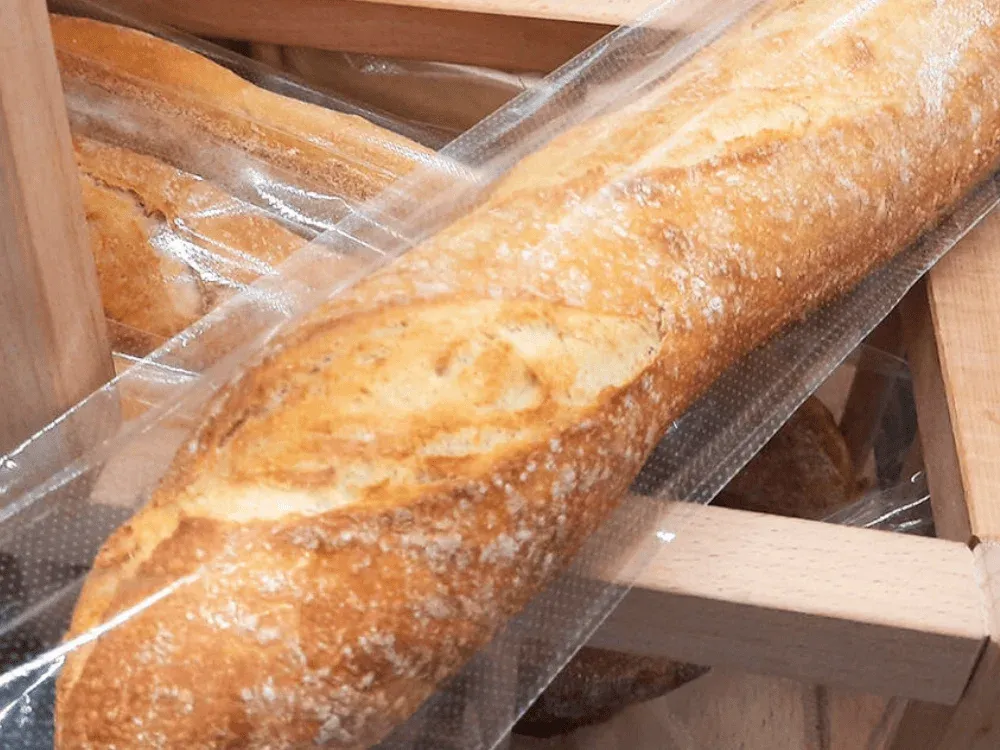

Hot-needled BOPP film
Microperforated film
BOPP film in the food industry
Micro-perforated BOPP film for bread and baked goods
Advantages
Advantages of microperforated films hot-needled BOPPfilms
The combination of controlled perforation and high-quality BOPP material offers numerous benefits for your packaging:
Contact usOptimal breathability and moisture management
Excess moisture and condensation are systematically removed. Your products stay fresh without developing mold or becoming soggy.
Extended shelf life
Precise control of gas exchange (oxygen/CO₂) has been shown to keep food fresh longer—from transport through retail to the end consumer.
Preservation of flavor and quality:
The fine perforations ensure that the flavor and character of the product are fully preserved, especially in the case of sausages, cheese products, and baked goods.
Brilliant transparency and eye-catching visuals
BOPP film stands out thanks to its extremely transparent, glossy surface—a real eye-catcher at the point of sale that showcases your products in the best possible light.
Printable in up to 8 colors
Logos, brand messages, product information, and promotional designs can be printed directly onto the film—for a professional look with high brand recognition.
Recyclable single-material
As a single-material PP product, ourfilms arefilms recyclable—an important contribution to your sustainability goals and the requirements of the food industry.
Versatile processing
Our perforated films be processed on wrapping machines, flow-pack machines, and seal-seam machines—ensuring seamless integration into your existing production line.
Cost savings through optimized film thicknesses
By strategically reducing film thickness while maintaining high quality, you can achieve significant savings in material and packaging costs—without compromising on protection or appearance.
Technical Specifications and Product Data
Our micro-perforated and hot-needledfilms from biaxially oriented polypropylene (BOPP) and combine superior material properties with the highest quality of workmanship:
- Material: Biaxially oriented polypropylene (BOPP), coextruded
- Available film thicknesses: 15 , 17, 18, 20, 25, 30, 35, 40, 48, and 50 µm
- Sealability: Sealable on both sides
- Surface: Pre-treated on one side for optimal printing results
- Recycling: Single-material , fully recyclable
- Core diameter: 76 mm or 152 mm
- Printing: Printable in up to 8 colors (CMYK + spot colors)
Possible versions:
- Unperforated (smooth film without perforations)
- Hot-needled (thermal needle perforation)
- Micro-perforated (ultra-fine perforations for maximum transparency)
- Macro-perforated (larger openings for intensive ventilation)
- Untreated or pre-treated under pressure
- Unprinted or printed with a custom design
Available as:
- Flat film
- Semi-rigid film
- Roll stock in custom lengths—each tailored to the processing capabilities of your packaging machine
Applications: Where microperforated films used
Use in the food industry
In the food industry, choosing the right packaging film is crucial for product quality, shelf life, and appearance. Micro-perforated films hot-needledfilms used in a wide variety of applications:
- Bread and baked goods: Bread , rolls, pastries, and fine baked goods benefit particularly from controlled breathability. The perforations prevent condensation from forming, which would soften the crust. This keeps baked goods crispy and fresh—from the oven to the consumer.
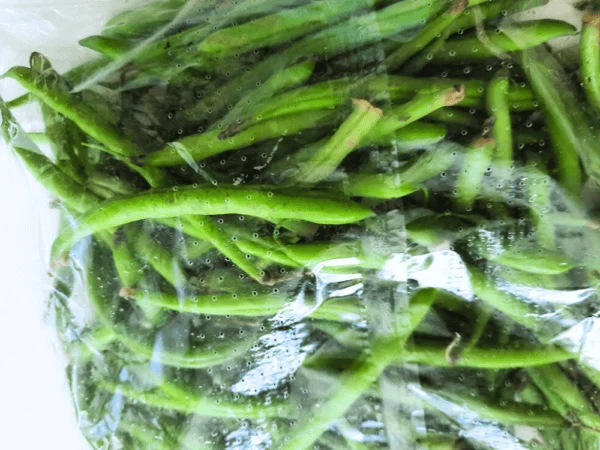
- Fruits and Vegetables: Fresh fruits and vegetables such as beans, peppers, tomatoes, and berries require packaging that regulates the natural ripening process. Microperforations control the oxygen levels inside the packaging, slowing down the ripening process and significantly extending shelf life.
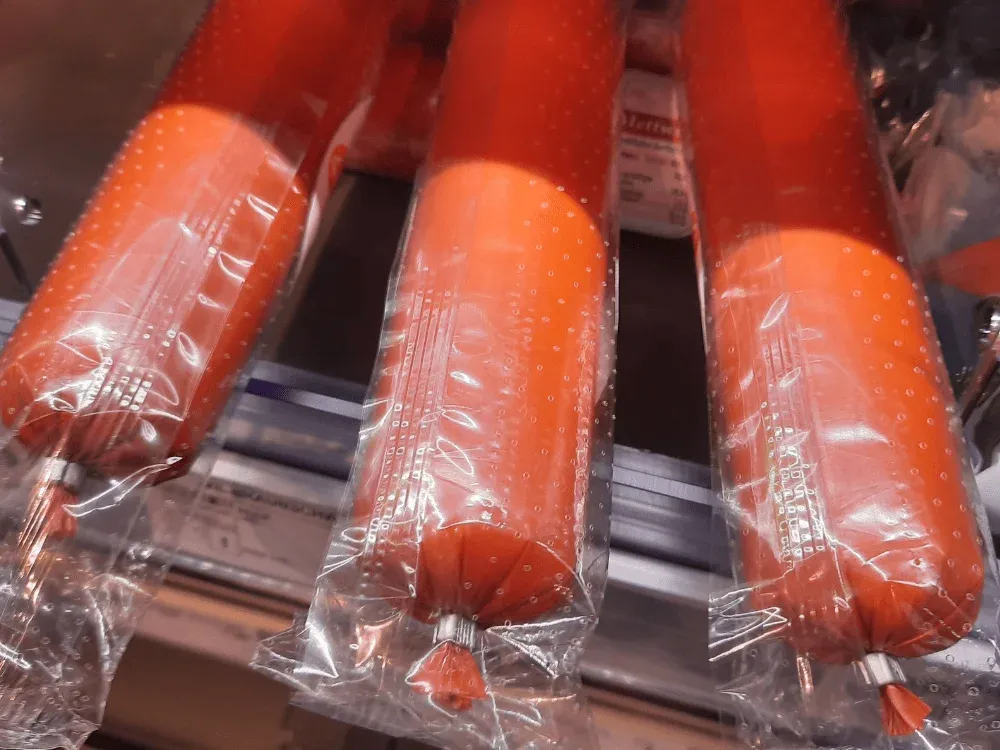
- Sausages and meat products: For sausages and meat products, hot-needle perforation ensures optimal environmental conditions: The packaging allows for sufficient ventilation while preserving flavor and protecting against external influences.
- Cheese products: Cheese has specific packaging requirements—it must be able to mature in a controlled environment. The fine perforations allow for exactly the right amount of gas exchange needed to ensure optimal maturation while providing protection.
Non-food sector
Microperforated films have also proven their worth films numerous applications outside the food industry:
- Medical products: Sterile packaging that combines breathability with hygienic protection
- Cosmetics: High-quality packaging with a professional look and feel
- Office and stationery supplies: Protection against moisture while allowing ventilation
- Textiles: Breathable packaging that prevents mold growth during storage and transport
- Electronics and ESD-sensitive products: All films available with optional antistatic ESD treatment—ideal for packaging electronic components, printed circuit boards, and other sensitive components
- Gift packaging: A stunning look and custom printing for exclusive product presentations
Whether for single-item or multi-item packaging, our micro-perforatedfilms ideal for the sophisticated packaging of products for end consumers.
Why Schlichter? The benefits for you as a customer
Since 1987, Schlichter GmbH has been your trusted partner for high-quality packaging films and packaging machines. As a family-owned business based in Dettingen/Erms, we combine tradition, technical expertise, and personalized service:
Free consultation- Made in Germany – Quality from our own production: Our films manufactured to strict quality standards and custom-finished to meet your specific needs in our own production facility.
- Fast delivery: Thanks to our extensive inventory and state-of-the-art manufacturing technology, we can deliver even on short notice—express delivery is available for urgent orders.
- In-house Perforation Center: With our latest fully automated perforation line, we can perforate film rolls using various perforation methods (micro, macro, hot needle) according to your specific requirements.
- Everything from a single source: As a system provider, we supply not only packaging films but also the corresponding packaging machines— semi-automatic fully automatic. This ensures you receive perfectly coordinated packaging solutions.
- Comprehensive certifications: Our films certified to ISO 9001, ISO 14001, ISO 22000, FDA, BRC, REACH-SVHC, and other standards—ensuring maximum safety in the food industry and beyond.
- 100% renewable energy: Our company is powered entirely by renewable energy sources—a concrete contribution to sustainability in the packaging industry.
- Personalized consultation from experienced specialists: Our sales team, with years of industry experience, provides objective and personalized advice—and can even visit you on-site if you prefer.
Other BOPPfilms our range of films
In addition to microperforated and hot-needled films , we films a comprehensive range of BOPP films with additional properties to meet various requirements:
We provide comprehensive and objective advice on our entire product range, along with extensive customer service. In particularly urgent cases, express delivery is also available.
Would you like more information? Write to us or call us at Tel: +49 (0)7123 97 99 0
Free consultation
FAQ
Frequently Asked Questions About Microperforated films
In hot-needle perforation, heated needles are passed through the film, creating slightly larger, heat-sealed holes. Microperforation, on the other hand, creates extremely fine openings that are barely visible to the naked eye. Both methods improve the breathability of the packaging but differ in the intensity of gas exchange. The choice depends on the specific requirements of your product—we would be happy to advise you individually.
Microperforated films particularly films for products that need to continue to breathe while packaged: bread and baked goods (to maintain crispness), fresh fruits and vegetables (to regulate ripening), sausage and cheese products (to preserve flavor), as well as flowers and plants. They are also successfully used in the non-food sector—for example, in textiles or medical products.
Yes, ourfilms printed in up to 8 colors. This allows logos, brand messages, product information, and promotional designs to be printed directly onto the film. Whether using the CMYK color system or special spot colors, we’ll professionally bring your custom design to life.
We offer our micro-perforated and hot-needledfilms thicknesses of 15, 17, 18, 20, 25, 30, 35, 40, 48, and 50 µm. The optimal film thickness depends on your product, the processing machine, and the desired properties.
Yes, ourfilms approved for direct food contact and have extensive certifications, including FDA compliance, BRC, ISO 22000, and migration testing. Halal certifications and the GRS Global Recycled Standard are also available.
Thanks to our extensive inventory and state-of-the-art assembly center, we are able to deliver even on short notice. Standard sizes are usually available immediately from stock. For particularly urgent orders, we also offer express delivery. Please contact us for specific delivery time information.
contact
Personalized consultation on your micro-perforated film – Contact us now
Contact us
Are you looking for the right micro-perforated film or heat-sealed BOPP film for your application? Our experienced sales team will be happy to provide you with personalized advice, with no obligation—on film thicknesses, types of perforations, printing options, and the optimal packaging solution for your product.
PPWR-compliant packaging
Does your packaging solution comply with the current EU Packaging and Packaging Waste Regulation?