
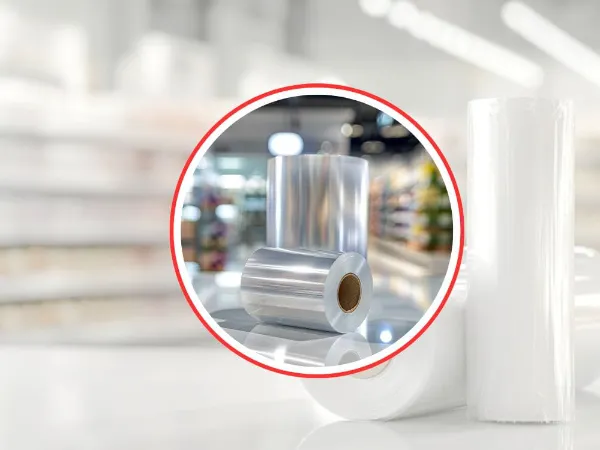
A new study shows that plastics—including plastic packaging—often have a better carbon footprint than alternatives such as paper, glass, or metal. As reported onwww.kunststoffverpackungen.de, the study found that plastic products generate fewer CO₂ emissions than other materials in 15 of the 16 scenarios examined, in some cases by as much as 90 percent.
Plastic products release 10 to 90 percent fewer emissions over their entire product lifecycle
More specifically, the researchers examined the impact of greenhouse gas emissions from plastic products compared to their alternatives. They concluded that, in 15 of the 16 scenarios studied in the U.S., a plastic product generates between 10 and 90 percent fewer CO2 emissions than the alternatives. The scenarios examined cover the entire life cycle of products, from production and transportation to disposal and recycling. At every stage, plastic scored highly due to its lightweight, durable, and versatile properties, particularly when compared to heavier alternatives such as glass or metal, which often consume more energy during manufacturing and transportation.
This applies in particular to packaging, the construction industry, and the automotive industry. The study examined 16 application areas across five key categories: packaging, construction, automotive, textiles, and durable consumer goods. These sectors account for 90 percent of the total volume of plastics produced worldwide. In two cases, the plastic products were compared with composite materials made of plastic and paper, and in 14 cases, they were compared with entirely alternative materials such as metal or glass.
Lighter weight, lower energy consumption, reduction in food waste, recyclability
Reasons for this include not only the lower weight of plastic but also the possibility of recycling. Lower energy consumption and the reduction of food waste through the use of packaging films are additional factors that make packaging films more sustainable. In particular, measures such as recycling and a longer service life could further increase the environmental benefits.
This shows that the sustainable use of plastic, particularly in conjunction with effective recycling strategies, can play an important role in reducing CO₂ emissions.
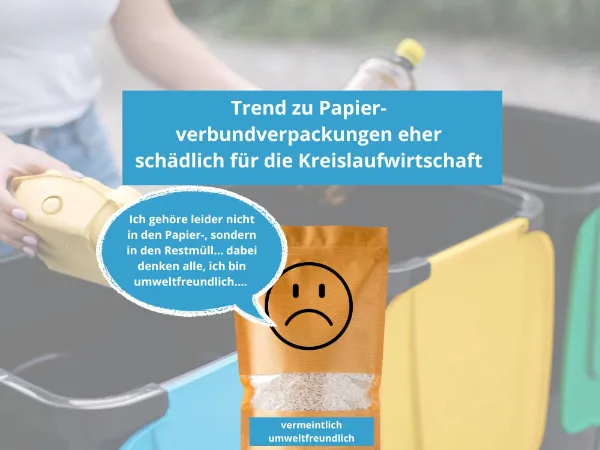
The trend toward paper composite packaging is harmful to the circular economy
As reported in an article on www.lebensmittelpraxis.de, a recent study by the Society for Packaging Market Research (GVM) reveals that the growing trend toward paper composite packaging as a substitute for plastic packaging is harmful to the circular economy. Although this type of packaging is considered more environmentally friendly, the results show that it is actually less recyclable and can increase waste volumes.
Consumers often perceive paper packaging as more environmentally friendly, since paper is generally associated with sustainability and recycling. However, this perception overlooks the reality: Many paper packaging materials contain plastic layers or other coatings that make them functional but significantly limit their recyclability. Separating paper from plastic in such composite packaging is technically complex and is rarely done in practice. As a result, this packaging often ends up in waste-to-energy facilities or landfills instead of actually being recycled.
Another problem is disposal: Consumers often cannot clearly determine how to dispose of these materials properly. While mono-plastics such as polypropylene (PP) or polyethylene (PE) can simply be placed in the yellow bin and are fully recyclable, the majority of paper-composite packaging ends up in the general waste. This not only increases the volume of waste but also makes it more difficult to return valuable raw materials to the recycling loop.
The GVM study predicts that the volume of paper composite packaging could nearly double by 2030. This would further increase the amount of waste and run counter to waste prevention goals. Dr. Wolf Karras of Eko-Punkt therefore recommends increased use of mono-plastics such as PP or PE, which offer significantly higher recyclability. These materials enable closed-loop recycling systems and thus actively contribute to the conservation of resources.
A change in thinking is necessary
The trend toward paper-composite packaging shows that consumers and businesses are often guided by seemingly sustainable solutions without questioning their actual impact. Comprehensive education and the promotion of truly recyclable materials are needed to achieve the goals of a functioning circular economy. Paper alone is not the solution—rather, packaging should be designed to be recyclable, resource-efficient, and easy to dispose of.
Recyclable and eco-friendly packaging films from Schlichter GmbH
This shows that the sustainable use of plastic, particularly when combined with effective recycling strategies, can play an important role in reducing CO₂ emissions.
We offer a comprehensive range of eco-friendly and recycled films: our polyolefin films BF RecyUse Circular E-PCR, BF RecyUse Circular S-PCR, and BF RecyUse Circular X-PCR, each containing a certified proportion of approximately 35% PCR (post-consumer recycled) material, our range of PIRfilms , containing approximately 50% PIR (post-industrial recycled material), as well as our BOPP film BF-PPVPLA, which is 100% biodegradable. All films are 100% recyclable in the LDPE04 stream and have reduced starch content, offering excellent processing characteristics and the highest levels of brilliance and transparency.
We, too, see room for improvement among consumers, policymakers, and retailers when it comes to raising awareness and promoting recyclable packaging materials. With our range of sustainable and innovative PCR and PIRfilms containing up to 50% recycled content, we offer innovative and sustainable packaging solutions that are 100% recyclable.
Do you have any questions or would you like more information? Please email or call us. We'd be happy to provide you with personalized advice.