
Bio-film is made from biodegradable or compostable materials and is part of a sustainable and environmentally friendly packaging strategy. These films are part of a broader trend toward more sustainable packaging solutions designed to help reduce the environmental impact of conventional plastic packaging.
The term “environmentally friendly film” refers to a wide range of packaging films that are either made from environmentally friendly materials or possess environmentally friendly properties in terms of recyclability. In addition to bio-films made from renewable raw materials, this also includes recycled films with a certified proportion of PIR and PCR recycled content, as well as reduced-thickness films, which help conserve resources by reducing material consumption while maintaining the highest quality.
What are organicfilms , and what are they made of?
Bio-films s can be made from various materials. For the packaging industry, three groups of materials are particularly relevant:
PLA (polylactic acid) is made from renewable raw materials such as cornstarch or sugarcane and is biodegradable. PLA-based bio-films s can be broken down in industrial composting facilities after use.
Sugarcane (bagasse) serves as the basis for films, which are made from 100% renewable raw materials and offer excellent processing properties.
Cellulose-based bioplastics are made from cellulose fibers derived from sustainably managed wood sources and are biodegradable.
These sustainable films offer an environmentally friendly alternative to conventional plastics, as they degrade under the right conditions and can be returned to the natural cycle without leaving behind any harmful residues.
Benefits and Characteristics of Sustainable Packaging Films
Environmentally friendly films are the solution for meeting today's climate protection requirements. Our sustainable, organicfilms and environmental films offer the highest quality while being environmentally friendly.
Product Protection and Display
No matter what product you sell—film packaging guarantees optimal quality. High-quality film packaging is essential for protecting products from dirt, moisture, and damage during transport from the production facility to the end customer. Our films are highly transparent and glossy, made of multilayer material, and feature exceptional brilliance—for a sales-boosting presentation at the point of sale.
High mechanical strength and processability
High mechanical strength and excellent welding and shrink properties are guaranteed for all films in our sustainable product line. Additional features such as Hot Slip, cross-linked films for very high cycle rates, antistatic treatment, and printing with up to 10 colors are available.
Food Safety and Recyclability
All films products are 100% food-safe and 100% recyclable in the LDPE04 recycling stream. In addition to providing optimal packaging, they meet the requirements for sustainable and environmentally friendly film packaging.
Sustainability Through Strength Reduction
Optimized thickness reduction cuts down on material consumption during production—while maintaining the highest quality and best properties. The reduced-thickness films help conserve resources and save costs at the same time. The principle of sustainable use also applies to roll lengths: Roll lengths are individually tailored to the needs of the packaging machines.
Bundling and Versatile Film Packaging
In addition to protective functions, it is also standard practice to bundle products into multipacks using film packaging. Depending on whether the product is perishable food or has a long shelf life, additional functions such as protection from light (UV protection), suitability for deep-freezing, or antistatic properties may be required.
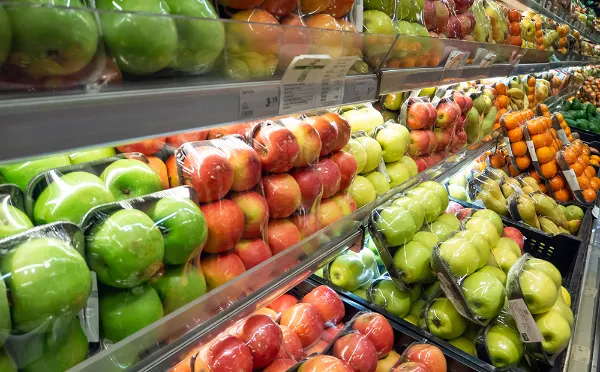
Applications: Why Plastic Film Packaging Is Indispensable for Fruits and Vegetables in Particular
The use of packaging films is particularly important for perishable products such as fruits and vegetables. When transported unpackaged, a significant portion of delicate products like bell peppers, broccoli, or lettuce arrive at the point of sale already spoiled, damaged, and unsellable, and are discarded before they can even be sold. The resources—such as energy, water, and time—expended in the production of these goods were wasted. This has a negative impact on the life cycle assessment.
In contrast, a thin, protective layer of polyolefin micro-shrink film, BOPP film, or biodegradable and eco-friendly film can significantly extend the shelf life of fruits and vegetables and ensure the product quality that consumers expect, even after extended transport.
In addition, biodegradable film is suitable for packaging hygiene and cosmetic products, as a cover material for plants in agriculture, for pharmaceutical packaging, and in many other areas where environmentally friendly packaging films are needed.
An Overview of Our Range of Organic and Eco-Friendly Films
As an innovative and experienced provider, we are pioneers in this field with our wide range of sustainable films products, and our BF-RecyUse© series offers sustainable organicfilms and eco-friendly films for all applications.
Organic "films " made from renewable raw materials
BF-RecyUse PPVPLA – PLA-based BOPP film, 100% biodegradable. Highly transparent, biaxially oriented, coextruded, and sealable on both sides. The film is ideal for packaging individual items and multi-item packages and offers outstanding gloss and tear resistance. Printable with up to 10 colors using rotogravure printing.
BF-RecyUse Bio Basic – Polyolefin fine-shrink film made from 100% sugarcane (bagasse). A sustainable organic film with excellent processing properties.
BF-RecyUse Bio Premium – Premium film made from 100% sugarcane (bagasse). Highest quality and excellent sealing and shrink properties for demanding packaging applications.
Recycled films containing recycled material
In addition to the Bio-films , our product line includes packaging films with a certified percentage of recycled material sourced from the recycling cycle. In terms of recyclability and the use of recycled plastic waste, our films already contain certified percentages of recycled material:
PIR—films (Post-Industrial Recyclate)— BF-RecyUse Eco, BF-RecyUse HLT, BF-RecyUse HSF, and BF-RecyUse HSX, with approximately 50% certified PIR content, available in many different thicknesses.
PCR—films —BF—RecyUse Circular E-PCR, X-PCR, and S-PCR with up to 50% certified PCR content. These innovative high-techfilms s represent an important step toward greater environmental protection and strengthening the recycling loop.
Our article on PIR and PCR filmsDelivery Options
All films are available as flat and semi-tubular films, pre-perforated or hot-needled depending on requirements, and can be printed in up to 10 colors. Thanks to our in-house film manufacturing and large inventory, packaging films are available even on short notice.
Sustainable Packaging with Organic and Eco-Friendly Films from Schlichter GmbH
With our sustainable packaging films, companies in the food industry, the pharmaceutical sector, the non-food sector, and many other industries are optimally prepared for the future. The perfect combination of functionality and environmental protection enables protective, sales-promoting, and sustainable film packaging.
By using organicfilms , and eco-friendly films, companies can help reduce their environmental footprint and promote more sustainable business practices. As specialists in packaging films and packaging machinery, we offer personalized consulting to help you find the perfect packaging solution.
Thanks to our in-house film production and large inventory, packaging films are available even on short notice. Please contact us—send us an email or give us a call. We’d be happy to provide you with comprehensive, personalized advice on the wide range of options for sustainable packaging.